A different perspective on buildings
For decades, architecture was primarily a male domain. Especially in the Netherlands, where big names like Dudok, Berlage and Gerrit Rietveld dominated before and shortly after the war. Women rarely made a name for themselves. At most, they were active in the background, as members of a design team. In Den Helder, too, the hand of a woman can only sporadically be recognized in buildings. But the tide is turning, and that is a good development, says Eva Ventura (31). "Women look at architecture and the environment very differently than men."’
Ventura is an architect, landscape architect, lecturer at Delft University of Technology, and interior designer. She currently works as a landscape architect for the municipality of Den Helder. Anyone who speaks with her quickly realizes: she is someone the municipality should cherish. If only because, in her field, she likes to think outside the box and, above all, in terms of solutions.
Advice from women
As mentioned, women view buildings differently. "They are much more sensitive to how a space feels. Social safety, accessibility, and the question of whether something is practical play a much stronger role for them," states Ventura. "It is more about quality of life and living comfort than about impressive architecture."’
The Women's Advisory Committee was once active in Den Helder. It assessed housing designs, including those for the Housing Foundation, based on comfort, livability, and daily use. The committee died a quiet death long ago.
V&D
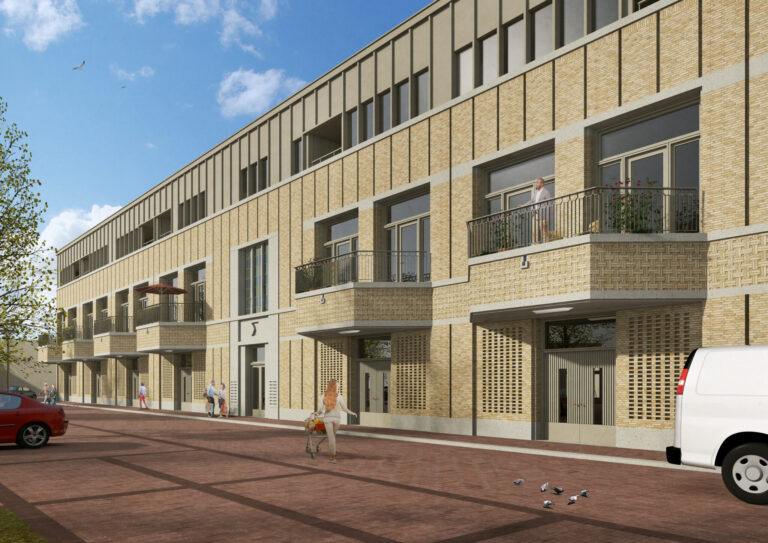
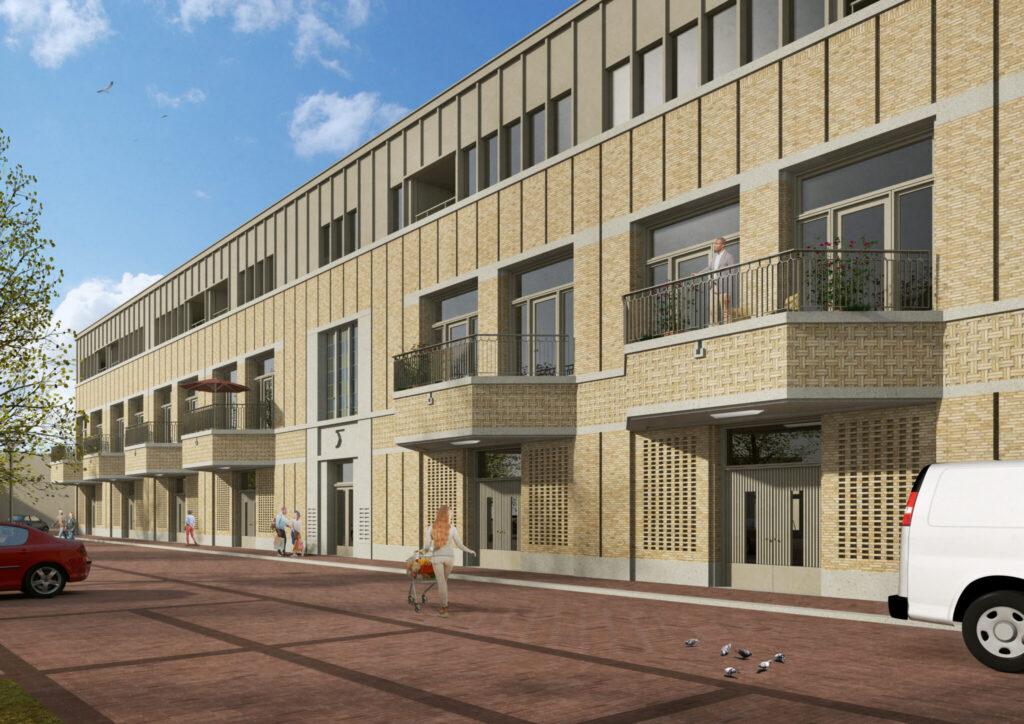
Female architects are playing an increasingly prominent role. They are also gaining a foothold in Den Helder. For instance, Ninke Happel of the Rotterdam-based firm Happel, Cornelisse, Verhoeven leads the design team for Het Warenhuys, the former V&D. The building is being transformed into 36 rental apartments with shops on the ground floor.
Ninke Happel: "I am certainly not going to claim that women are better architects than men. But women do indeed have a different perspective. My contribution is that I primarily draw attention to the outside world. For example, how a building fits into the urban environment. And, of course, what it does for the future residents."’
Current credit
,"User-friendliness is very important. Everything has to be right. It just has to be a really good building. So that the residents really get the feeling of coming home. An example? There are apartments at the front and back of Het Warenhuys. You could have those open onto a long corridor in the middle of the building. Without daylight, that creates an unpleasant, anonymous, and unsafe feeling. So we had large sections cut out of the concrete floors so that the homes on both sides open onto a small inner courtyard with daylight."’
Historically, the rise of female architects was a gradual one. Very gradual. But it did happen, as shown by the website Gebouwen door Vrouwen (Buildings by Women) by Eva Ventura's friend Sofie van Brunschot. The site displays dozens of designs by female architects. Including, ironically enough, the Gerrit Rietveld Academy in Amsterdam. Named after the famous male designer but conceived by a woman's team, Paulien Bremmer.
Juffenflat
Another well-known example is the RVS flat in Rotterdam, popularly known as the Juffenflat. Built in 1958 specifically for unmarried working women and designed by Wilhelmina Jansen, the project had already been initiated in 1938 by the 'Foundation for the Promotion of Housing for Working Women'. The flat, which was eventually built twenty years later, was a paragon of light, air, and space. Although the apartments were only 50 square meters in size, the design incorporated careful consideration of storage space, laundry and cooking facilities, and even window cleaning. A delivery person could drop off groceries through a delivery hatch in the resident's absence.
Spouses
According to Eva Ventura, female architects long stood in the shadow of men. Even when they formed an architect couple together with their husbands.
,"Denise Scott Brown was married to Robert Venturi in the United States. She had a significant share in the designs, and although their architecture firm also bore her name from 1980 onwards, the honors and prizes always went to Robert." Scott Brown therefore stayed away from the ceremony in 1991 in protest, when her husband won the prestigious Pritzker Architecture Prize.
In the Netherlands, the influence of the woman within an architect couple is sometimes clearly visible. "In Rotterdam, there is a large apartment complex on Schouwburgplein, the Woondok," says Ventura.
Children
It was designed between 1980 and 1986 by the architect couple Hartsuyker. Ventura clearly recognizes the input of the female half in it. "In the homes, some of the windows extend down to knee height. The idea behind this is that small children can then also look outside."’
Yet, it sometimes remains a struggle to carve out a full-fledged place in the male-dominated world of architecture, Eva Ventura concludes from her own experience. Especially as a young designer.
,"When I went along to a meeting with clients, they thought I was the assistant. Age matters. You really have to prove yourself to be taken seriously. To reach the top, you sometimes have to act tough and businesslike. And then they just think you're a bitch. While female architects add value. Their perspective on various aspects of a design is much broader. I dare to assert that architecture designed by women is different. Wonderful to immerse yourself in, and very beautiful.''’
RONALD DEN BOER