Youth workshop, bike tour, and lecture on what is beautiful and what is ugly
What once was has not always remained the same. And: what is beautiful, what is ugly? During the Day of Architecture at Den Helder on Saturday, June 14, change ('transition') takes center stage. What remains of heritage when you start tinkering with it? A wonderful opportunity to look at buildings differently. This applies not only to adults. Young people are also explicitly involved in this day.
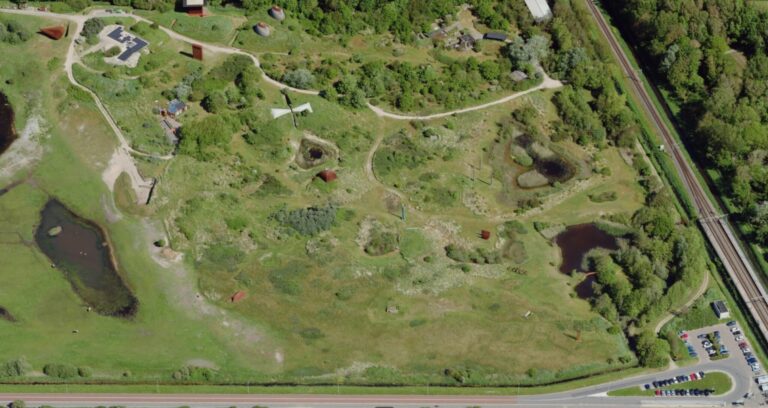
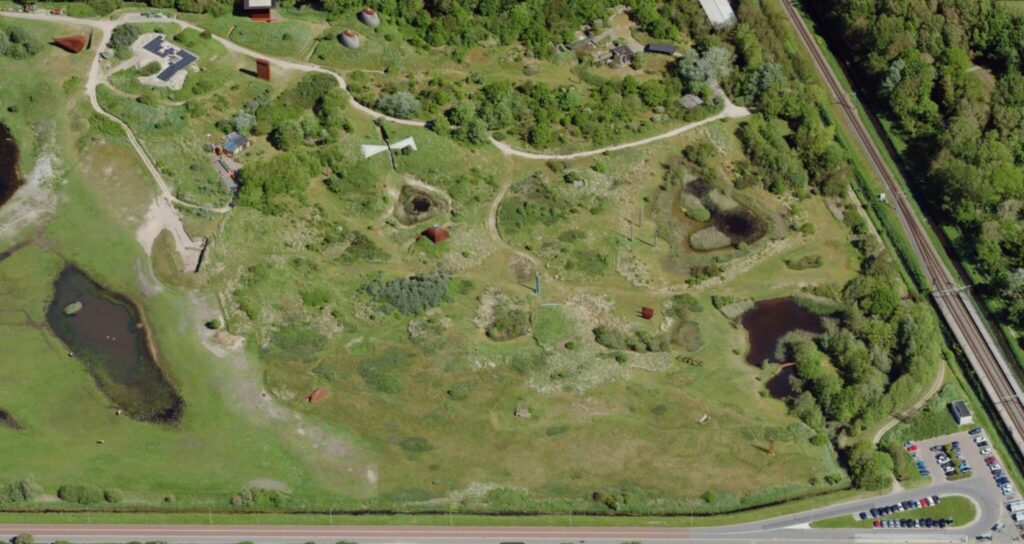
To start with that last target group: young people aged 10 to 14 are on Saturday the 14th.e A warm welcome to the painting project De Nollen on Burgemeester Ritmeesterweg. Here, the late artist RW van de Wint designed and built gigantic artworks, but played with color and light in the bunkers in the inland dune area. As a result, the somber concrete structures now evoke a completely different, pleasant feeling. The young participants will receive an explanation about this and will have the opportunity to design and build their own artwork in the form of a maquette. More information can be found in the box accompanying this article.
Jutter of the Year Jan Kikkert will take interested parties on a bicycle tour through Den Helder on Saturday, June 14, where he will show at historical sites how buildings were given a new purpose or disappeared entirely to make way for impressive new construction. See the box for more info.
Dormer windows
Not on the Day of Architecture itself, but on Monday, June 23, architect and artist Rob de Vries from Alkmaar will talk about the importance of historical heritage and how one can or should deal with it in modern times. See the box for information about this lecture.
De Vries knows what he is talking about. He is a member of the Municipal Advisory Committee on Environmental Quality (GAO), formerly better known as the Aesthetics Committee. At almost every meeting, De Vries reviews plans from residents of Nieuwediep who want to modify their—sometimes historic—homes or business premises with dormers, extensions, new construction, and so on.
De Vries has a distinct vision regarding the relationship between beauty, ugliness, and heritage in architecture. His approach is characterized by respect for historical context and a critical attitude towards contemporary trends that, in his view, detract from the external and cultural value of our buildings.
Fashion
,"I want to design buildings that will still be standing in 100 years. That fit into their surroundings, into their relationship with society. A building must – in my humble opinion – carry something eternal within it. It must not be 'in fashion'. Then it cannot go out of fashion either."‘
In an era where black, grey, and white dominate urban architecture, De Vries advocates for a return to historically justified color usage. He painted his own home, a 17th-century canal house in Alkmaar, in ochre and oxblood red. This choice is not only aesthetic but also a statement against the dullness he observes in modern urban planning: "It seems to be the fashion to make everything in the city black, grey, or white. As if we are in mourning!"’
De Vries emphasizes that colors such as ochre yellow and blood red historically suit the original appearance of the building better than current fashionable shades. He argues that following fashion trends without considering personal taste or historical context leads to a loss of identity and diversity in the cityscape.
Churches
As an architectural historian and architect, De Vries is involved in various projects where the preservation and repurposing of heritage are central. One example is the future of the Sint Joseph Church in Alkmaar. He advocated for a new purpose that both respects the monumental value of the building and is sustainable: "Residential use is the most sustainable option and is not subject to rapid change. This provides a long-term guarantee that no renovations will take place." In Den Helder, too, some churches have been designated for residential use or there are plans to convert them into homes, such as the Lutheran Church on Wezenstraat and the Reformed Church on Steengracht.
Window cleaners
As an architect, he works in a specific way, De Vries explains on his own website. "When a new building is coming somewhere, it is important to look at what is already there. How does your new project fit in? Should it be new and contemporary, or should it hide itself? For which target group are you building? Does the location have a history? Does culture play a role? And pay attention to the practical: are there enough parking spaces, and will children grow up happily there? Furthermore, beauty is sometimes more important than practicality. Light is essential to me. And if that means placing an extra window in an impossible spot, then I do it. Creative window cleaners exist, too."’
RONALD DEN BOER