

The Ravelijnweg or the Ravelijncenter, the term "ravelijn" is not unfamiliar to us. But where does this name actually come from?
A ravelin is an outwork of a fortress or a rampart. It usually consists of a triangular or pentagonal fortified island or a small peninsula attached to a defensive wall. Often, the ravelin is further protected by a ravelin moat, which is located within the moat.
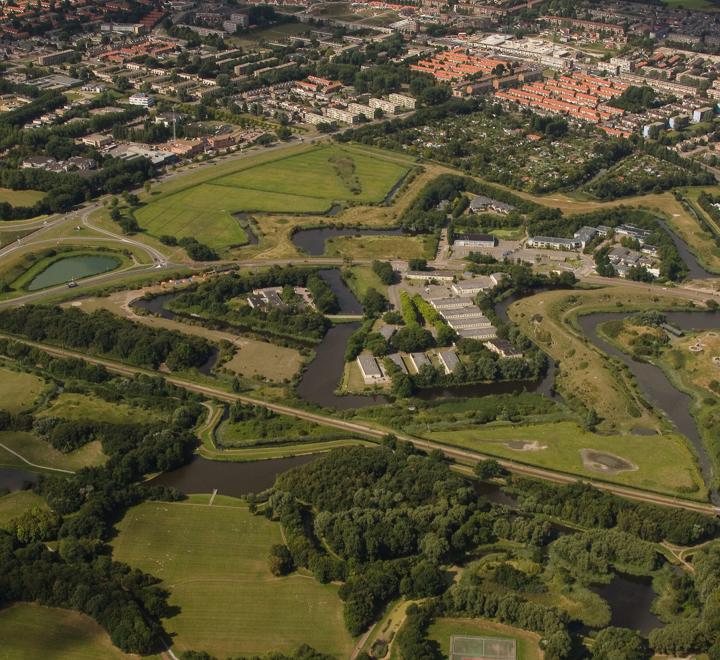
Anyone who has ever glanced at a map or an aerial photograph of Den Helder knows that the city boasts peculiar patterns, the star-shaped patterns in the landscape, built around 1811 and 1813. Fort Dirksz Admiraal and Fort Erfprins still retain their distinct shape. To a much lesser extent, Fort Westoever and Fort Oostoever, of which only a portion remains.
At the time they were built, such defensive walls were extremely effective in protecting a fort. With ravelins and bastions (triangular or pentagonal extensions), there were no blind spots around a fort, allowing one to fire back from any side while also keeping an eye on one's own walls. After the introduction of aircraft in warfare, such defensive walls became an outdated strategy.
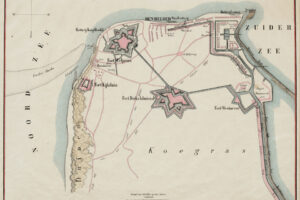
Photos: Aerial photograph of Fort Dirksz Admiraal and Fort Erfprins by Pieter de Vries and an overview of the Stelling Den Helder via Stichting Stelling Den Helder