Stelling Den Helder is one of the oldest remaining military defense lines in the Netherlands. It was commissioned by Emperor Napoleon Bonaparte to protect the Willemsoord Naval Shipyard. The town of Den Helder owes its current shape to this fortification, which is still largely visible in the landscape.
With sea on three sides, Den Helder enjoys a unique location. In 1811, Napoleon considered this coastal spot the "Gibraltar of the North" and stationed his naval fleet there, which gained royal status under King William I in 1813. Other cities have also received the "Ordinance on the Admiralty" since 1598, but Den Helder is the only remaining Admiralty city.
To defend the naval port, Napoleon commissioned the construction of several forts: Fort Kijkduin, Fort Erfprins, Fort Dirksz Admiraal, Fort Westoever, and Fort Oostoever. In October 1811, he visited Den Helder to inspect the construction progress. He was impressed and reviewed the progress again the next day. Although the French period ended in 1815, the French plans were lingering and continued by King William I. In 1825, the forts were connected by a dike, which together formed the Defence Line of Den Helder. The brainchild behind this was hydraulic engineer Jan Blanken. The sixth fort, a coastal armored fort with the largest guns the Netherlands had ever seen, was built by the Dutch themselves: Fort Harssens, which began construction in 1885.
Fort Kijkduin
Since 1989, the Stelling Den Helder Foundation, established at the time, has been managing and preserving the forts, bunkers, and other military heritage.
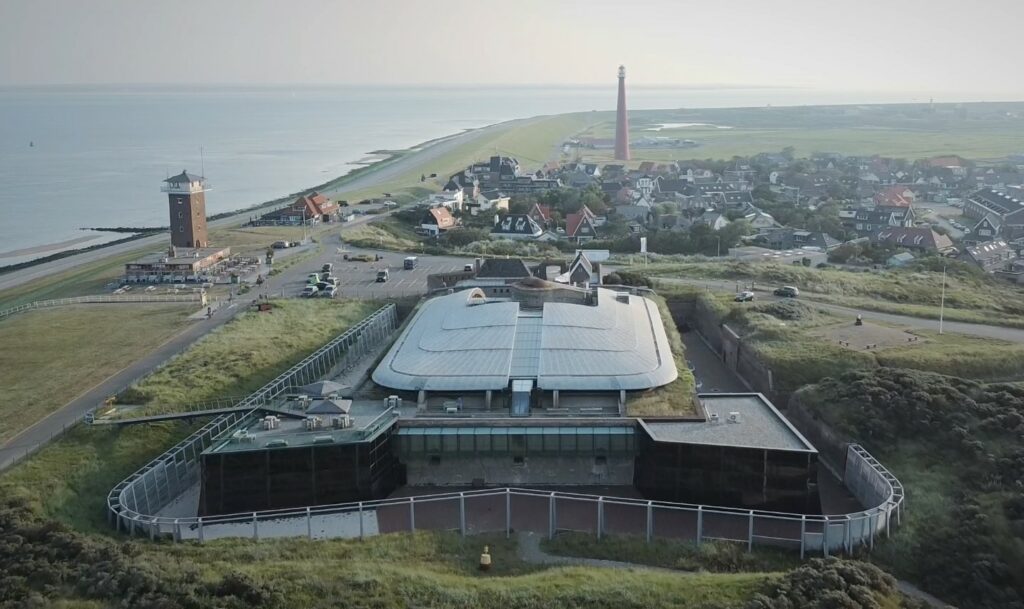
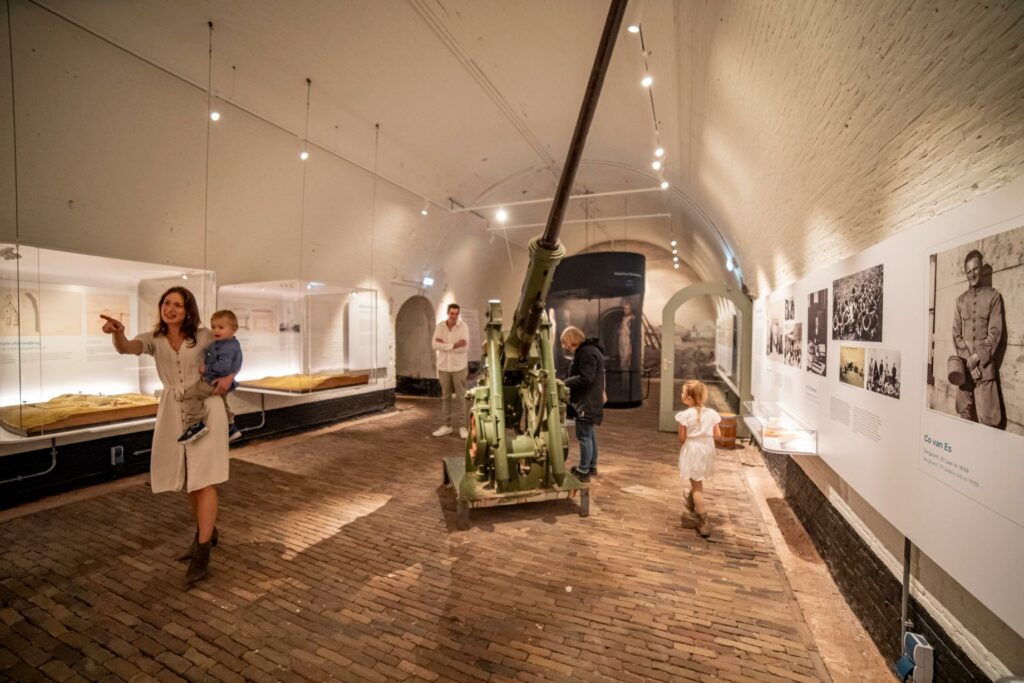
Fort Kijkduin is by far the biggest draw; with a large sea aquarium and an interesting museum about the French and German eras, visitors will find their way to Huisduinen. Kijkduin boasts a highly strategic location; in 1799, it was learned the hard way that the English enemy could bombard the town right through the swamp and dunes. Soldiers at Fort Kijkduin kept a close eye on the sea and the village of Huisduinen (which, incidentally, had existed since the year 800!), while the other forts protected the town within the defense line. The final sections of the defense line were added by the German occupying forces during World War II.
Building around forts is prohibited due to the required clear field of fire, and this remains the case to this day. This is clearly visible in aerial photographs by Den Helder, and as a result, beautiful nature reserves have been created or preserved.
The construction of the French fortifications changed the appearance of the village of "Die Helder Buyrt." Construction took place within the line, and the Willemsoord naval shipyard enclosed the entire area. As a result, the location has remained a key point for the navy and national defense ever since.
Fort Erfprins is the largest fort in the Netherlands and also the only fort currently in use by the military. It houses a training institute, and occasional tours of the old part of the fort are offered.
Den Helder is a fascinating city to visit, with a truly impressive history and unique values. It's a city visibly revitalizing and working hard to showcase its military cultural heritage, hidden in nature. In short, it's worth a visit!