Successes and losses in war can be closely linked, as evidenced by the story of HNLMS O 16, which sank three Japanese ships in a single day, only to hit a mine itself. Only one man survived: Quartermaster Cor de Wolf.
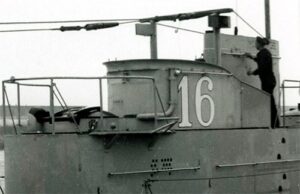
A close-up of the turret of HNLMS O 16. Here stood the six men who had survived the initial impact. The boat was steered from the cockpit, behind the number 16. (Photo: Royal Netherlands Navy)
The submarine HNLMS O 16 entered service in 1936. The only submarine of the O 16 class was built by the De Schelde shipyard in Vlissingen. After a voyage to the United States, the submarine was tasked with protecting merchant ships off the Spanish coast due to the civil war there. In 1939, the submarine was sent to the Dutch East Indies, where war broke out in the Netherlands in May 1940.
War patrol
In 1941, O-16 and its 42 crew members were given a new home port: Singapore. From that moment on, O-16 fell under British command. On Saturday, December 6, 1941, HNLMS O-16 departed for its first patrol, heading north toward what is now the Gulf of Thailand (then the Gulf of Siam). Soon, O-16, under the command of Lieutenant Commander AJ Bussemaker, spotted two Japanese destroyers, but war hadn't yet begun, so the torpedoes remained safely in their tubes.
A day later, everything changed. On Sunday morning, December 7th, Japan attacked the American base at Pearl Harbor, after which the United States, as well as the Netherlands, declared war on Japan. HNLMS O 16 received the message on December 8th, and the patrol was subsequently transformed into a war patrol.
During the night of December 10–11, Commander Bussemaker sighted another Japanese ship and this time fired. However, due to a tropical downpour, it was unclear to the O-16 whether the three torpedoes had hit their target.
This was quite different a day later. The O-16 had followed a merchant ship toward Pattani, a city in southern Thailand. Navigation Officer Van Einsbergen, as a merchant navy officer, was familiar with this region and then skillfully maneuvered the 76-meter-long submarine into the bay, where the unsuspecting vessel anchored alongside three other large Japanese ships.
The O-16 launched five torpedoes, all of which hit their targets. According to quartermaster Cor de Wolf, who, as the sole survivor, is a key source, there was great joy on the bridge and in the control room.
Three ships were badly damaged, but because the bay was shallow they did not sink completely.
Quietly, the O 16 escaped from the bay and remained in shallow water, out of range of the Japanese destroyers.
HNLMS O 16, with one torpedo still on board, set course for home port Singapore after the successful action. The boat sailed submerged during the day and surfaced at night, as submarines could reach higher speeds on the surface at that time.
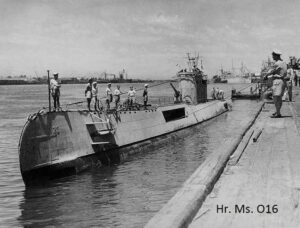
HNLMS O 16 in Den Helder. (Photo: Royal Netherlands Navy)
Fate
The boat also surfaced during the night of December 14th to 15th. Quartermaster De Wolf had been on watch in the control room until 22:00 on Sunday evening, the 14th, and reported to the bridge at midnight for the next watch. First Officer Lieutenant Commander Jeekel, Corporal Engineer Bos, Able Seaman Van Tol, and Able Seaman Kruijdenhof were already present. They formed what would now be called the bridge team: officer of the watch, helmsman, and lookout.
Commander LTZ1 Bussemaker had also arrived on the bridge shortly before, as searchlights had been visible on the horizon since 11:30. After a while, the O-16 diverted course toward one of the searchlights above the islands, which was visible every 20 minutes. By then, the O-16 was northeast of Tioman Island.
Singapore was not far away, and the O-16 was supposed to prepare for a new patrol there. But the boat would never reach its home port. Around 2:30 a.m., disaster struck: the O-16 struck a mine. Thanks to the report Cor de Wolf later wrote, the events of the following days have been preserved: “(…) a violent explosion; I see the boat break in two at the deck tubes [torpedo tubes on deck, halfway between the bow and the bridge, JK], a huge column of water flies across the bridge, followed by a warm smell of diesel. The commander and the senior officer try to kick the turret hatch shut, but they fail. My raincoat is stuck to the mine gear, but I manage to break free; the boat sinks within a minute, and then I'm in the water.”
Swimming
Some of the 36 crew members aboard must have died instantly in the massive explosion, but the rest fought for their lives as the boat sank to a depth of 52 meters. There was no help, and no one managed to escape from the submarine. Only the six men on the bridge surfaced.
De Wolf: "I look around and find nothing. I start calling out and get an answer. The others are floating further away, so I swim towards them. When I reach them, we're all together except for the commander. We call out to the commander and get an answer, but he can't get to us. He was probably too far away, and I didn't see him again. I ask if Mr. Jeekel knew what it could be. He told me it was probably a mine. We oriented ourselves, and pretty soon it became clear that if we wanted to swim to the islands, we had to keep the moon to our left and a star to our right. So we swam along side each other, but Sailor Van Tol could barely cope. We had already taken off our clothes; only Van Tol was still wearing a small jacket and couldn't get it off. I couldn't stand to watch and swam back to help him, which I succeeded in doing.".
Seaman Van Tol was just a few months old, 21, and the youngest of the six, but he didn't make it. There had been no life jackets on the bridge or deck. This was to prevent them from floating to the surface during depth charge attacks and revealing the submarine's location. Van Tol and the others had to survive entirely on their own.
The young man failed. Daylight slowly rose over the South China Sea, and "a few moments later, Van Tol sank."“
“"We could see the islands far off on the horizon. I often urged people to swim on," De Wolf wrote, but in vain: "At around eight o'clock, Mr. Jeekel also sank. I asked Bos and Kruijdenhof if he was alright, but they only replied 'thirsty.' We were increasingly able to distinguish the island peaks. Rescue might have come soon; a plane flew overhead but didn't notice us."”
After six and a half hours of swimming, Kruijdenhof, from Suriname, also slowly lost his strength: “At nine o'clock, sailor Kruijdenhof sank. I know the exact time because my watch ran until ten o'clock, then it stopped; I was left with Bos. We swam again, but I noticed that the current was carrying me far east of the island. I then swam against the current with Bos until we were clear of the islands again, and then straight ahead again. Another plane approached, a Dutch one, but we didn't notice it either. A tremendous thirst tormented us as the sun set, so for over seventeen hours. Afterward, Bos said to me: 'Cor, I can't go on any longer. If you make it out alive, give my regards to my wife and two children.' Then he sank into the depths.‘
The Wolf was alone in an immense sea with only a few islands in the distance; his boat had sunk and his colleagues drowned. But the Wolf didn't give up: "I swam on again, God constantly giving me the strength to stay afloat, but I was repeatedly pushed away by the treacherous current. Finally, after swimming for approximately 35 hours, I reached the island around noon on Tuesday; I was thrown onto the rocks, where I lay, bleeding profusely from my back and legs. The sun beat down fiercely on my body; a sharp pain in my back and legs, and a tremendous thirst brought me back to reality.".
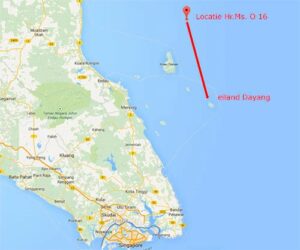
Cor de Wolf covered a distance of about 80 km in 34 hours. Singapore lies to the south, and much further north lies Pattani, where the O-16 torpedoed the Japanese ships. (Map: Google)
Washed up
It was later calculated that if De Wolf had correctly estimated that he'd washed ashore around noon, he had indeed swum for about 34 hours and covered a whopping 80 km. Quartermaster De Wolf had, in fact, landed on the uninhabited island of Dayang. But for De Wolf, dwelling on his achievement wasn't important: "I needed water; that was the main objective. I then started walking up, which took about five hours, but without success; there was no water there. I fell down everywhere, then got up again; the thorns scratched my whole body. When I couldn't find any water up there either, I decided to start the return journey and spend the night on the rocks. When I got down, I found a crevice with water running out of it. I lay there drinking, then fell into a fitful sleep, waking up repeatedly."“
“As the sun rose, I tried to walk around the island, which wasn't easy because it was all 6 or 7-meter-high rocks. After a long climb and scramble, I finally reached the side of the island. There, to my great joy, I spotted a small canoe. I shouted as loudly as I could; the native heard me and came toward me in his canoe.
De Wolf gestured to the man with hand signals that he wanted food and drink. The Malayman then gave him a coconut and told him to get on his canoe. An hour later, De Wolf arrived on one of the other islands. There, he was given trousers ("at least, they used to be trousers") and led before the village chief. The chief spoke Malay, and so did De Wolf, like many navy men at the time. De Wolf stayed in the village for three days, and on Saturday, December 20th, he was able to board a sailing canoe to the mainland. Then followed a grueling journey for De Wolf on his worn-out feet through a swamp and the jungle. With machetes, the group cut their way through the jungle until they arrived at a bivouac of Australian units. The hardships were over.
He was driven to the Naval Base in Singapore in a luxurious Ford V8, where he arrived on Sunday evening.
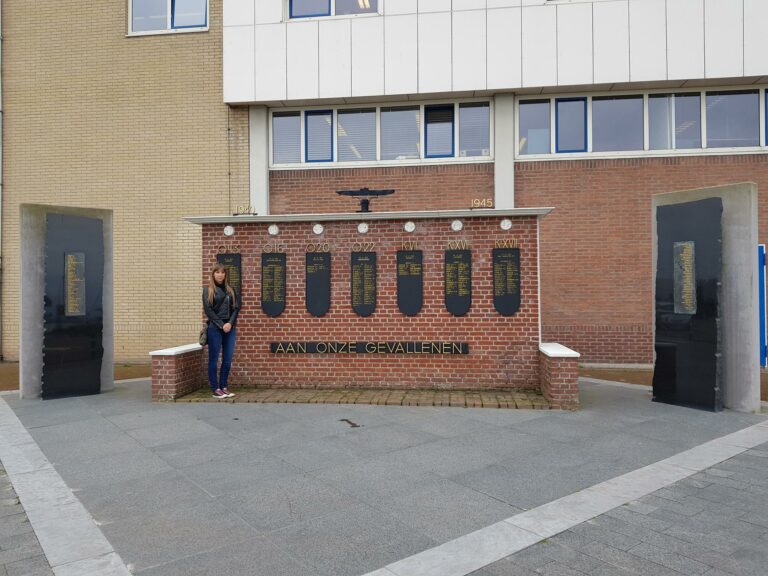
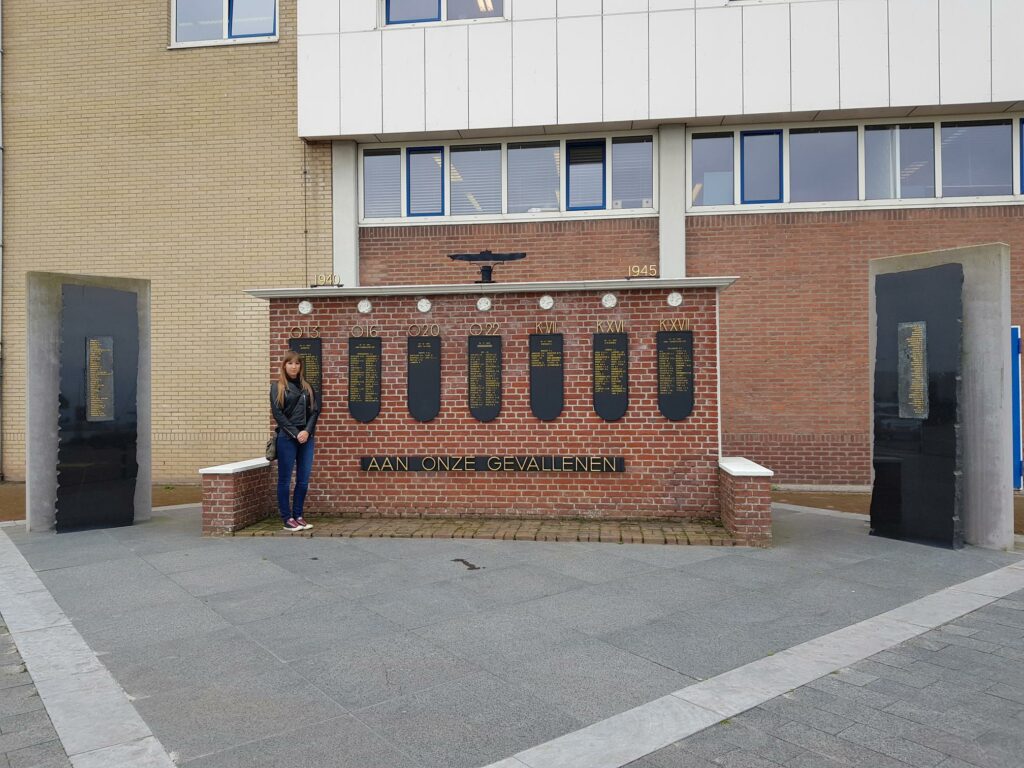
The Submarine Service monument in Den Helder with the names of the fallen crew members of seven submarines.
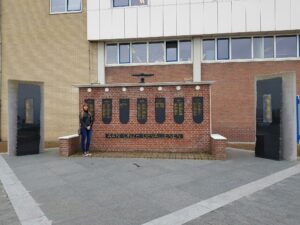
(Photo: Jouke Spoelstra, Navy Submarine Service)
Report
The quartermaster was examined in sickbay and found to be unharmed. The next day, De Wolf was finally able to report on what had befallen the O-16. He did so to Dutch naval officers, as well as to Vice Admiral Layton, Commander-in-Chief, Eastern Fleet. De Wolf then departed for the Dutch East Indies and personally informed Vice Admiral Helfrich, Commander-in-Chief of the Royal Netherlands Navy in the East.
Despite all the horrors, De Wolf remained loyal to the Royal Netherlands Navy and served in the Submarine Service throughout the war. The quartermaster was awarded the British Distinguished Service Medal for exemplary courage and resourcefulness in wartime, the Dutch Bronze Lion for exceptional bravery, and the War Remembrance Cross. De Wolf retired in 1962 with the rank of Chief Skipper.
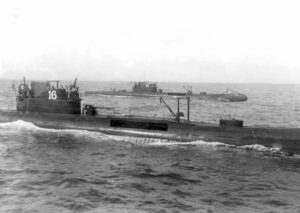
Submarine 0 16 marine Den Helder
Convincing evidence
Unfortunately, not everyone was convinced of De Wolf's performance. HNLMS O 16 hadn't been recovered after the war, and there was no record of a minefield at the location where De Wolf had claimed O 16 should have been. Some concluded that O 16 had struck a British minefield, much closer to Dayang Island than De Wolf had claimed, and that the commander had deviated significantly from his course. Only much later did it become clear that a Japanese minefield had indeed been present, but the definitive proof wasn't provided until 1995.
A Swedish diver living in Singapore had located the wreck of an unknown submarine and contacted a journalist from the Algemeen Dagblad newspaper. The Royal Netherlands Navy then sent an identification team consisting of Hans Besançon, the two sons of the commander, Ton and Henk Bussemaker, and expedition leader Lieutenant Commander John van Zee to the South China Sea. The wreck turned out to be HNLMS O 16 and was located in a location that confirmed De Wolf's story. This put an end to all doubt.
Cor de Wolf did not live to see that identification; he died in 1983. The wreck of the O16 is no longer there either; on July 5, 2019, it was announced that it had almost completely disappeared. The submarine was likely salvaged for the sale of iron.
Note:
This story was previously published on the Navy Ships website
This story was published in a shortened version in the City Marketing Newspaper, issue number 41.
With thanks to the Tradition Chamber of the Submarine Service of the Ministry of Defence.
.