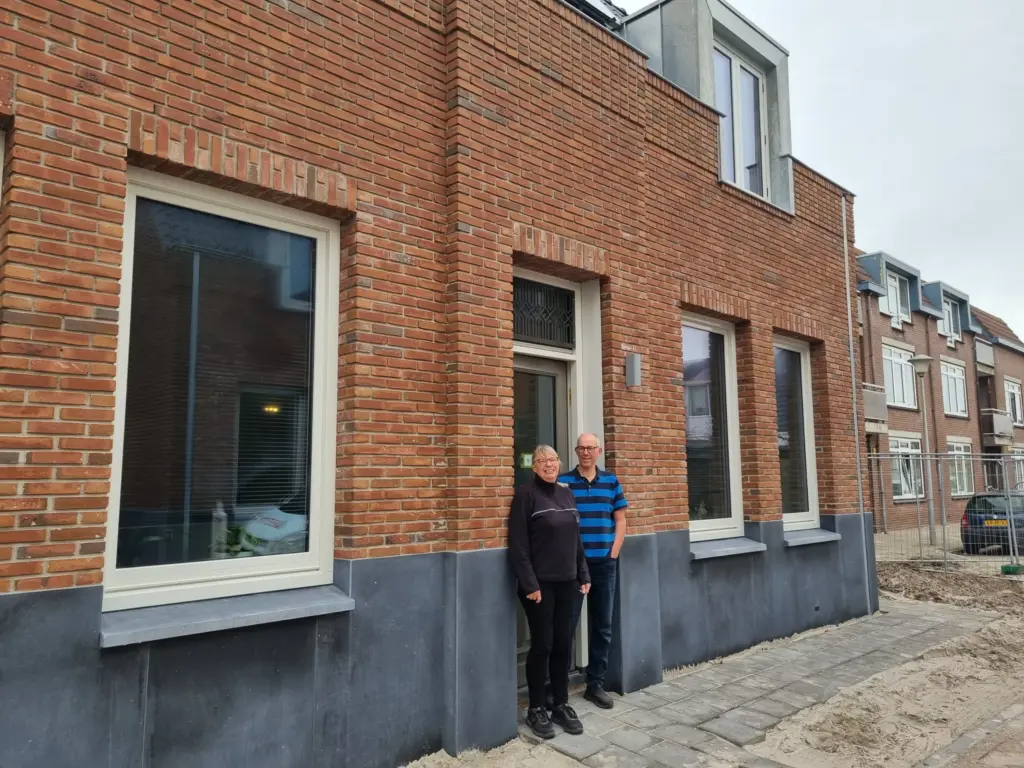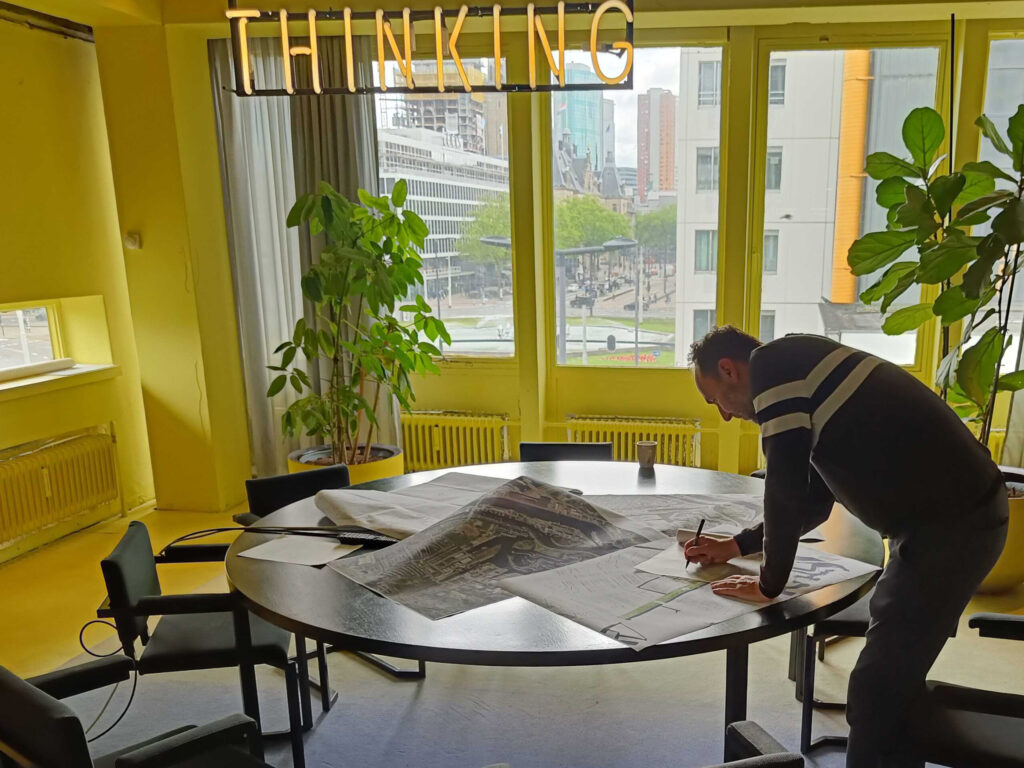

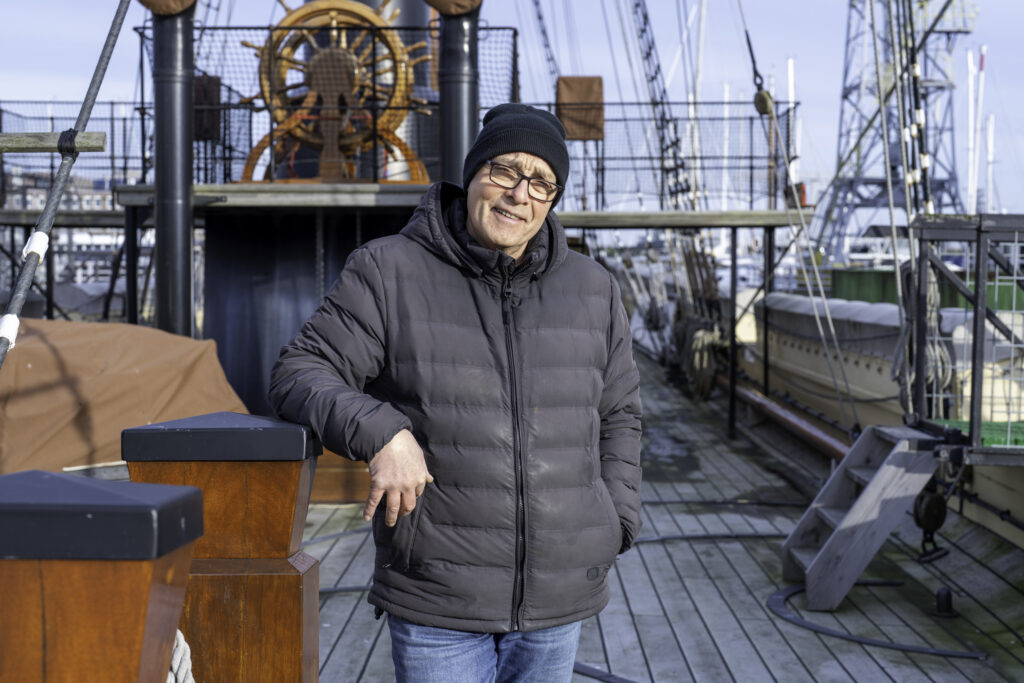
He worked at the Royal Shipyard, was a municipal councilor, co-founder of the Nieuwediep General Housing Association, and worked at Housing Foundation Den Helder from 2000 until his retirement. After that, he started working as a real estate advisor at Zeestad. Can he look at the city like an 'ordinary' resident by now? ‘No. Once that virus gets a hold of you, it doesn't let go. My wife also always says: 'Just look at something else for a change,' but when I look around me, I constantly see what is being built and renovated.’ He thinks many things are going well, but remains critical. “Then I think: why did they do it this way?‘
Born in Best in Brabant, he ended up in Den Helder at the age of one. “In the Vogelbuurt, because my father joined the Navy. We went to Curaçao for a few years, but eventually moved to Nieuw Den Helder. Until I started dating and we moved in together in the city center.” That wasn't entirely a given. “We absolutely didn't want to live in an apartment. I said I had apartment neurosis. I didn't know what it was either, but it sounded good. Well, single-family homes were being built in Julianadorp. We were going to take a look and rode there on the moped. That was the best thing I ever did, because we knew immediately that we didn't want *that*. Headwinds, construction sites, and sandstorms. That wasn't going to work.‘ It became an upstairs apartment on the Binnenhaven and, after a year, a purchased home on Vlamingstraat. He still lives there. ”I was still working at the shipyard back then. My goal was to be able to walk to work, and I have always been able to do that.“
Then I'll just do it myself.
It was at a time when the municipality had grand plans for the Oostsloot neighborhood. A road was to be built through it, buildings were to be demolished, and apartment blocks were to be constructed. The residents banded together to stop it. Working Group Centrum, which Van der Veen also joined, lodged an appeal. “The plans were ridiculous. We cheerfully opposed them.” With success.
With the opposition to the municipal plans came political engagement naturally. Van der Veen became a municipal councilor for the PvdA, where he championed, among other things, housing construction and youth accommodation. He held the position for nine years. “And yet, it really wasn't for me. I was already in second place in the second term, so I must have done sensible things, but still.” He explains that he was always at odds. “Behind my house were some properties that seemed very suitable for one- and two-person households. We had far too few of those in Den Helder. So I kept asking questions about that in the municipal council. Until the alderman said: 'Mr. Van der Veen, if you know it all so well, you should just do it yourself.' That is when we set up the Algemene Woningbouwvereniging Nieuwediep, the current Woontij.‘ The AWN started as a counterpart to the Woningstichting, although the parties would later cooperate closely and willingly. We have built on the Kerkgracht, among other places, created homes in the former Lidwina Hospital, then the Jozefschool and Catharinaschool, and eventually throughout the entire city.’
Nineteen years after the founding of AWN, Van der Veen received a call from Woningstichting. “By then, there had long since been no conflict. We were the collaborating housing corporations, as we called it. I was asked if I wanted to oversee the Duinpark project in Nieuw Den Helder.” It was the beginning of eighteen years at Woningstichting. “A wonderful time, during which we accomplished a great deal. There was tremendous enthusiasm to make something beautiful of the city.” He looks back on it with appropriate pride. “I remember well that we had to choose an urban planning firm. I am still happy that we engaged West8 back then. They were still young, but truly amazing.” When asked, he names the developments in the city center as highlights, but he certainly does not want to overlook Nieuw Den Helder. Especially the Kreekpark. We sat down with the residents night after night to spruce it up with new construction, the renovation of flats, and, for example, the artworks that stood by the theater. Those have been completely restored. What I do find very upsetting, however, is that the bridges over the creek, which were promised to the people, are not coming after all. I was very angry and disappointed when I read that in the newspaper. It is an important part of the plan and very important for connecting the adjacent neighborhoods.“
Admiration
Van der Veen was actually a shipbuilder. He also renovated his own house. So, building and beautifying things is in his blood. Is that why he has always dedicated himself to Den Helder? “Well, I remember reading a piece years ago in the Saturday supplement of Vrij Nederland. It was about depression. There was a photo of a seagull on the corner of a concrete building. I immediately recognized it as Den Helder. In the article, an Amsterdammer explained that on his most depressed days, he would take the train to Den Helder. As soon as he walked out of the station, he knew things weren't actually that bad for him. And then he would take the train back.” It was a great motivator. “So much has happened in the city since then. And it is still continuing. The nice thing is that new plans are rarely received with enthusiasm, but ultimately, the residents are always happy.” He therefore speaks with praise of the now-departed management of the Housing Foundation. “We didn't always agree with each other, but I have enormous admiration for everything they have accomplished.”
His love for Den Helder is just as strong as it has always been. That is partly due to the neighborhood and partly due to the city. “Everything has passed by over the years. Every social stratum, from doctors and naval officers to status holders. Our neighborhood is society. Furthermore, I love the dike, where I take a walk almost daily after my retirement. I love the shipyard where I used to work. I am now a board member for the Bonaire and also work on the ship myself. Back in my old trade. I can’t help it. And I love that Jutters always say what they think.” He cannot imagine ever leaving. “No, certainly not. My wife was born here. You really can’t get her to leave. And what we really appreciate is that our children have also always stayed in the neighborhood. This is our city.”