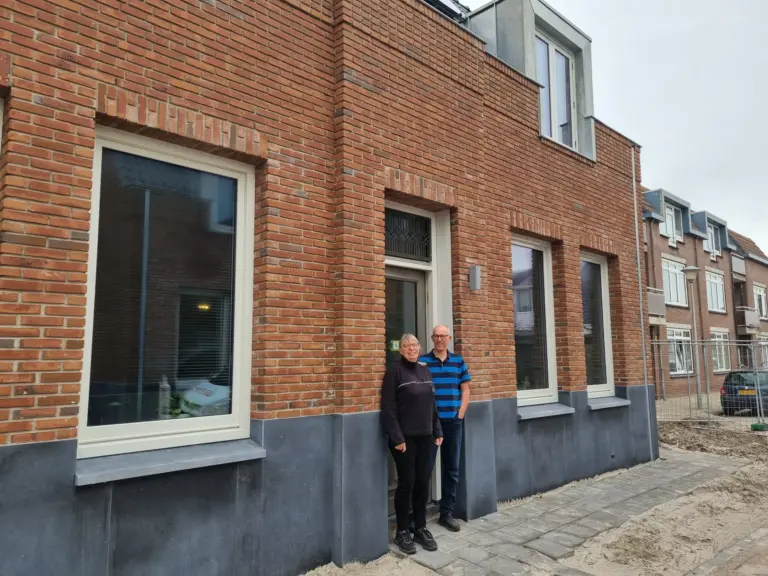
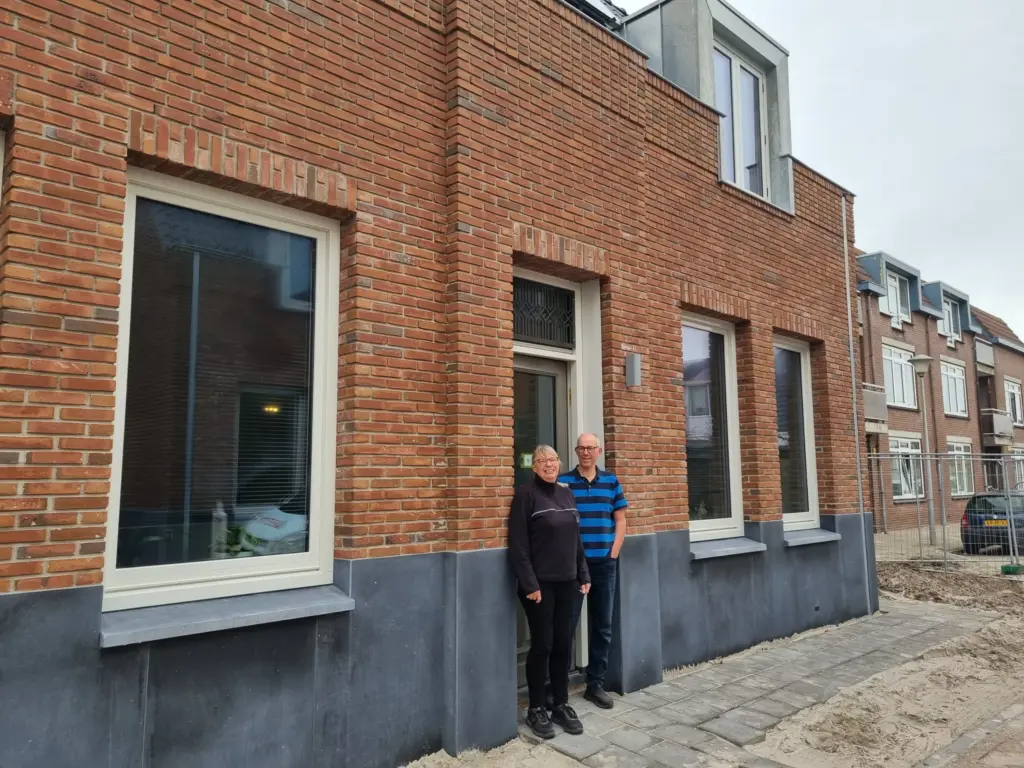
In fact, they have been camping in their brand-new house since November. The completion of the first ten new homes in Oostslootstraat and the beginning of Koningstraat was delayed time and again this year. Very annoying, of course, when your old home has already been transferred. But by the time this magazine is published, the furniture will have arrived, and the couple from Zeewolde can finally make the house a real home in Den Helder.
Well, finally? Actually, the city on the Marsdiep is already a bit of their home. Because even before they were properly settled, Hans had already an allotment garden at the complex on Texelstroomlaan, said to be the oldest allotment garden complex in Den Helder. Zso that he can now fully devote himself to his hobby: gardening.
Well, how does one end up in Den Helder from Flevoland? "Via Funda," explains Els van Lopik. "We saw this project and it seemed like a good fit. Close to the sea. That is important to me. And it is affordable." Laughing: "I might want to live in Castricum, but we don't have the Castricum money for that." Through Coltof Makelaardij, the couple acquired a brand-new home on Oostslootstraat, built on behalf of Woningstichting/Helder Vastgoed BV.
They sold their owner-occupied home in Zeewolde within ten days. Els and Hans lived there for six years. "Not reluctantly, mind you," says Els. "But we did find it a bit of a stifling village. A lot of social control," Hans adds.
After Barendrecht and Zeewolde, nothing stopped them from moving further north. Els: "We have no family or children and we are both retired, so travel distance is not a problem." Hans: "If we wanted to go to Amsterdam, it used to take us 45 minutes from Zeewolde. Now it's an hour. So that doesn't make much difference."’
Their new house is located a few hundred meters from the sea. "Lovely, I enjoy swimming in the sea," says Els. "And we are in the city, close to all amenities," Hans mentions as another advantage. The couple loves cycling, walking, and the theater. So, a visit to De Kampanje is definitely on their to-do list.
From Barendrecht in South Holland, via Zeewolde to the tip of North Holland. Is this the last stop for the couple? Els looks at Hans with a cheerful expression: "What comes next? Sweden?"’
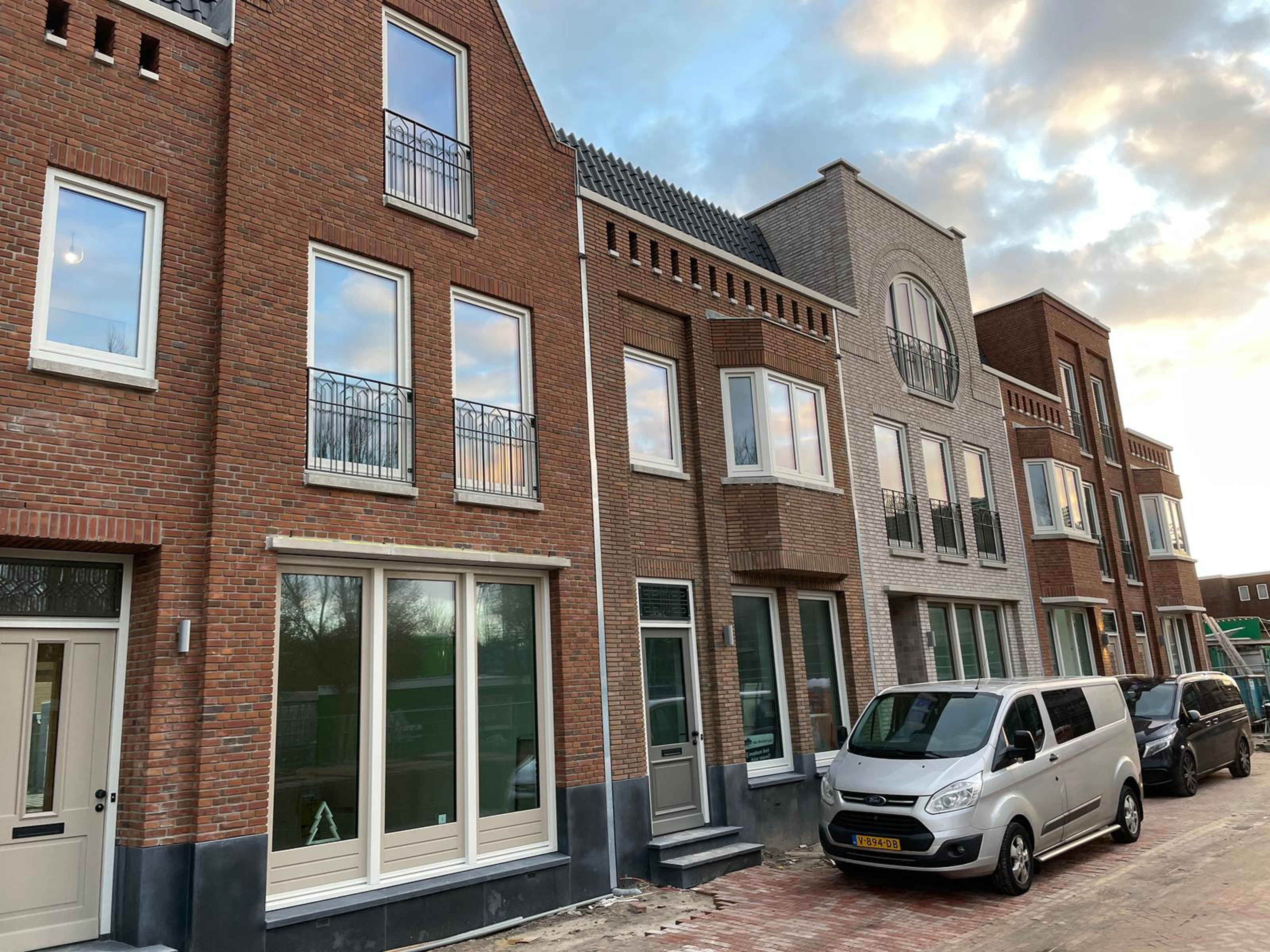
For decades, the population of Den Helder declined by sometimes hundreds per year. In recent years, that decline has slowed significantly. The number of inhabitants appears to be stabilizing, primarily thanks to newcomers. This is important for maintaining the level of amenities and the retail sector. The city is becoming increasingly attractive to people from other parts of the country. Real estate agents regularly report selling homes to 'outsiders'. This is also evident in the Koningsplein/Koningsdriehoek project by Woningstichting/Helder Vastgoed. Of the fourteen homes, four have been sold to people from outside Den Helder, including from Canada and Italy.