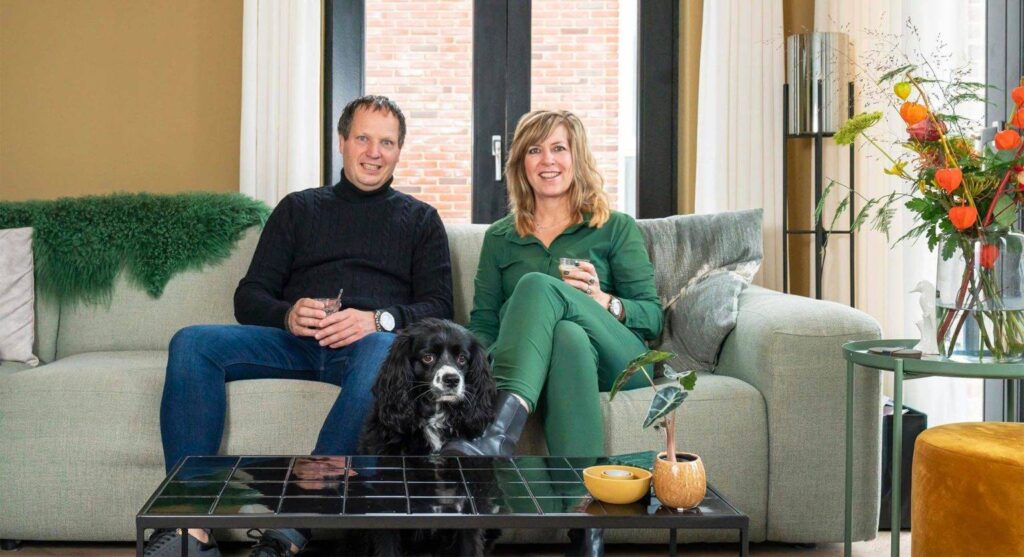
Kijmpe and Simone make space for Dijkkwartier
It has been over twenty years since he bought the house where he now lives with Simone and their pug, Varkie. Behind the house lies a substantial piece of private land. Of his 11e until he was 18e He was already living on the Kanaalweg back then. “When we moved here, Den Helder was just in the final phase of the dike raising. The new flats were being built over there.” Laughing: “Well, back then they were new. I’m 56 now, so those flats are well over 40 years old.” Gradually, the renewal is due for renewal.
When it project Dijkkwartier When they started playing, they were invited to an information evening, where Kijmpe signed up for the advisory group to be established. “Essentially, a group of people who feel involved, want to stay informed, and want to contribute their ideas.”
He initially joined that advisory group quite critically. “That has certainly changed. I have become increasingly enthusiastic. Positively critical, I think, is the word. The plan is ambitious, but I do understand it. If you want to save Den Helder from dilapidation, it is not realistic to cling to the past.”
Speaking terms
He is aware of the resistance to the Dijkkwartier. “Yes, then that seesaw will go on the dike!” he summarizes the dissenting voices. “People always shout that many more social housing units are needed and then turn against this kind of ambitious new construction. But I understand that Den Helder already has an abundance of social housing, and the new plan also meets the legal requirements. In the past, many people moved here because they could live here more cheaply and spent a relatively small portion of their income on rent. I can completely understand that, but it is not necessarily good for the city as a whole. I really don't mean this unkindly, but if you want your city to flourish, it is necessary that people with more disposable income live there too. If money circulates in a city, you keep the city alive. If not, restaurants go bankrupt and shops disappear, with the result that residents end up looking outside the city anyway. A local flow of money ensures that people keep jobs within the city and that their money can flow back into the local economy.’
Kijmpe sees another reason for new construction. “Homes have to meet increasingly stringent environmental requirements. If you look at the homes standing here, you have to invest a great deal of money in renovation to make them future-proof.”.
Realistic
Kijmpe and Simone entered into discussions with the Housing Foundation. “That is the only way for us to do this. Ensuring that you work together on speaking terms stays. We have seen before that people were the last ones left in an apartment building that was scheduled for demolition. Everything else was boarded up. You don't want that. If you are realistic and take each other seriously, you can surely find common ground somewhere.”
In the meantime, they have reached an agreement with the Housing Foundation. "A good deal, concluded in a pleasant manner," Kijmpe summarizes, without wishing to go into details. They have since moved to a beautiful home in Nieuw Den Helder, a stone's throw from the dunes and with plenty of space around the house.
To convey
Zeestad plays an important role in the speaking terms of this project. “Imagine if a property developer from the Randstad first had to buy up all those homes, demolish them, and then build new ones. Those homes would have to yield a high return for such an entrepreneur to recoup their investment. Zeestad is not focused on making a profit for itself, but invests in the city. I know there are residents who feel they dominate the streetscape too much. But do realize that there is no other group that dares to invest that money in our city.”
Kijmpe therefore does not think that Zeestad is calling the shots too much. “No. Initially, they stood in the street with a coffee cart to approach people and invite them to the information evening. They are doing a good job of that. Resident participation is very important. Zeestad is a committed group that is becoming increasingly better at getting people on board. We have a good, open, and honest relationship.”
Moped
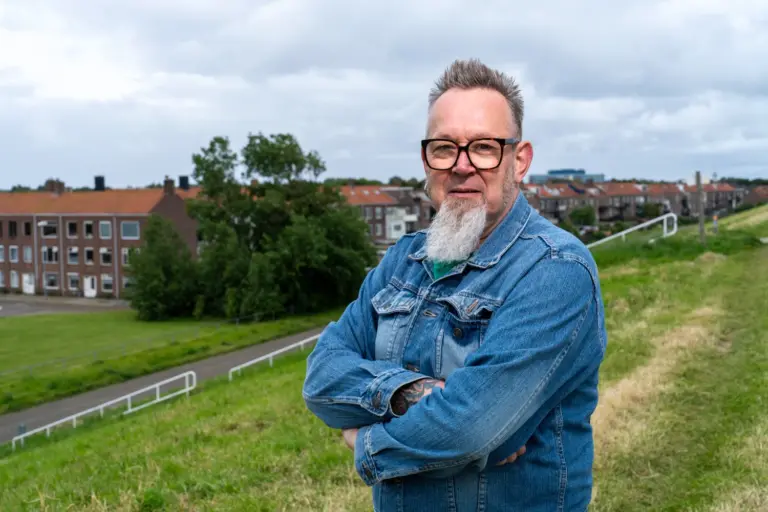
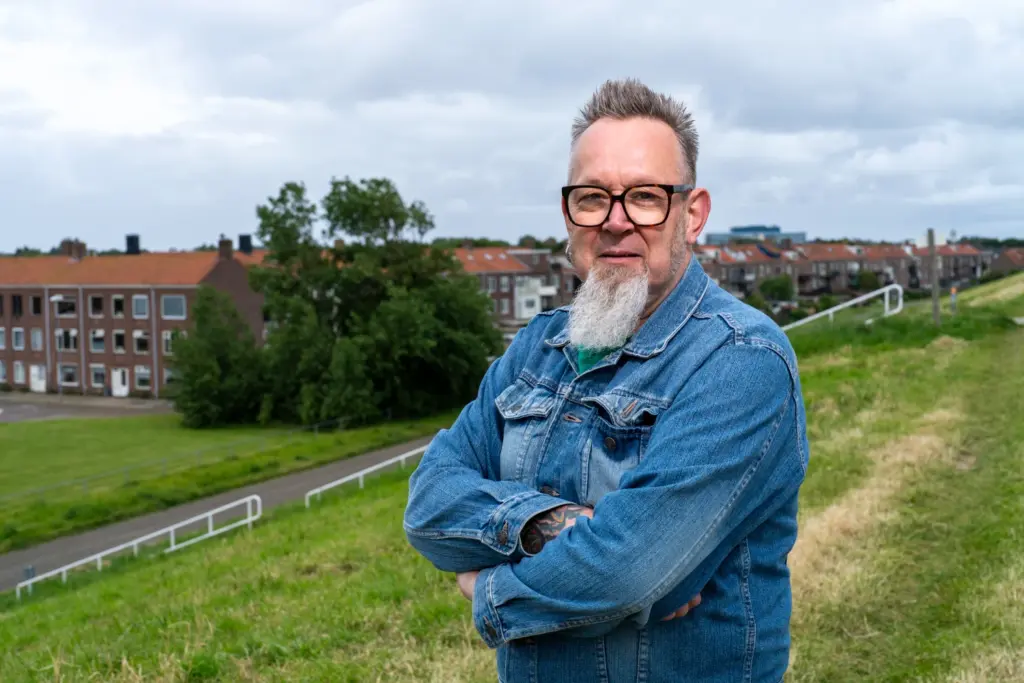
Kijmpe is now finally leaving behind the area that was his favorite spot in Den Helder for decades. “I used to tear up the dike here on my moped back in the day. Yes, this really is my spot, and it’s going to hurt to leave. But still, if you look at everything that has happened in the city over the past few years, you have to admit that it is improving. I truly believe that, and we should spread the word.”
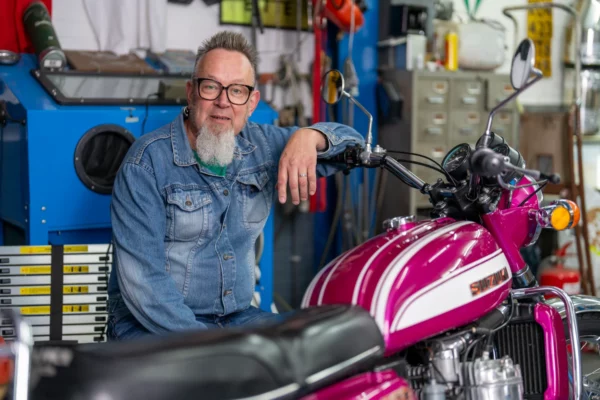
Kijmpe enjoys tinkering with engines. “I used to tear up the dike here on my moped back in the day.’