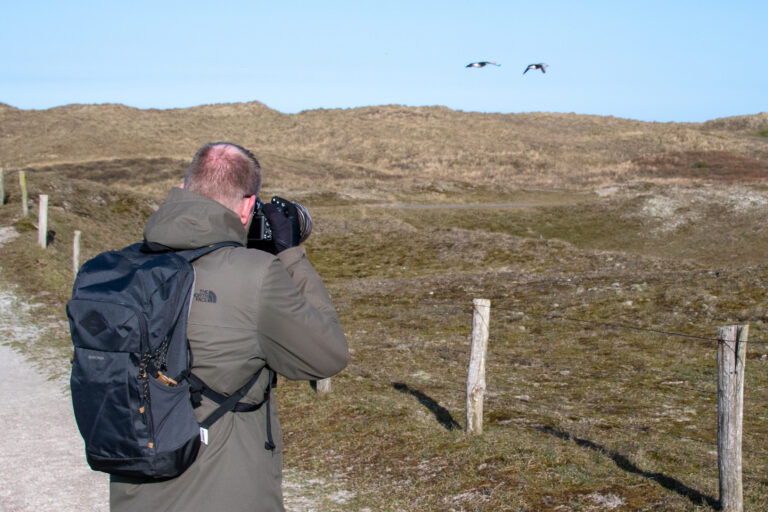
For a moment, Walter Das thinks he hears a special bird. He stops, listens, and looks around. That sound again. Then he has to laugh. “That’s not a bird, that’s a bicycle coming up,” says Walter, laughing. It typifies a morning in the dunes. Here, you listen differently. More sharply. Because behind every sound, something special can be hidden. You don’t have to be an expert here; you walk up the path, and before you know it, you stop because you hear something.
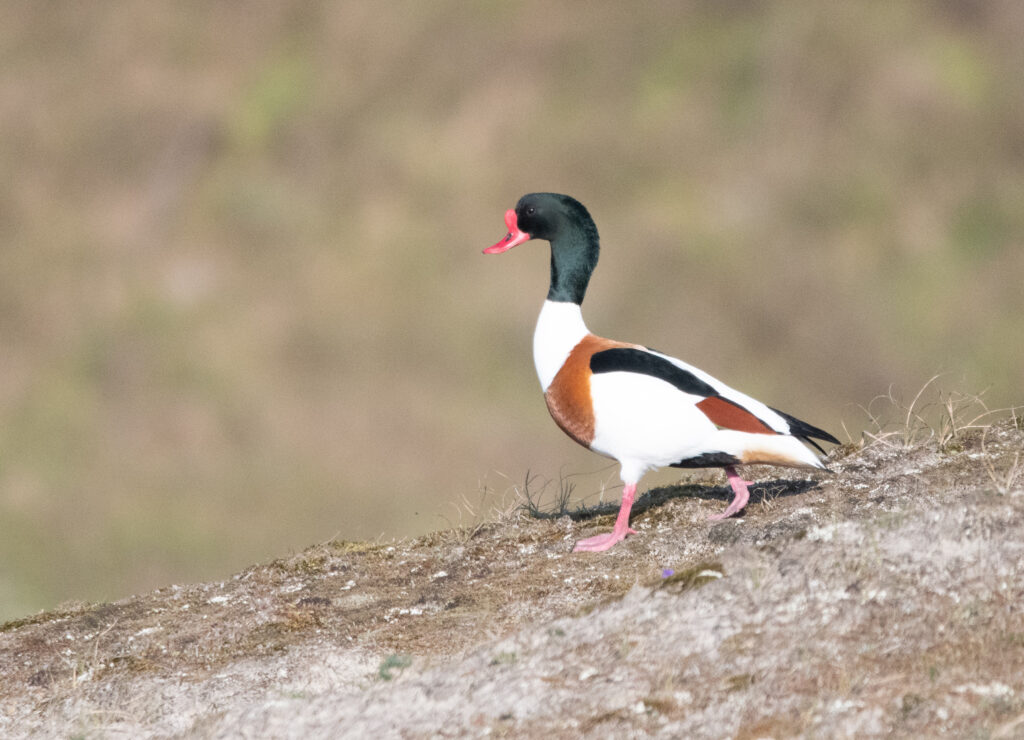
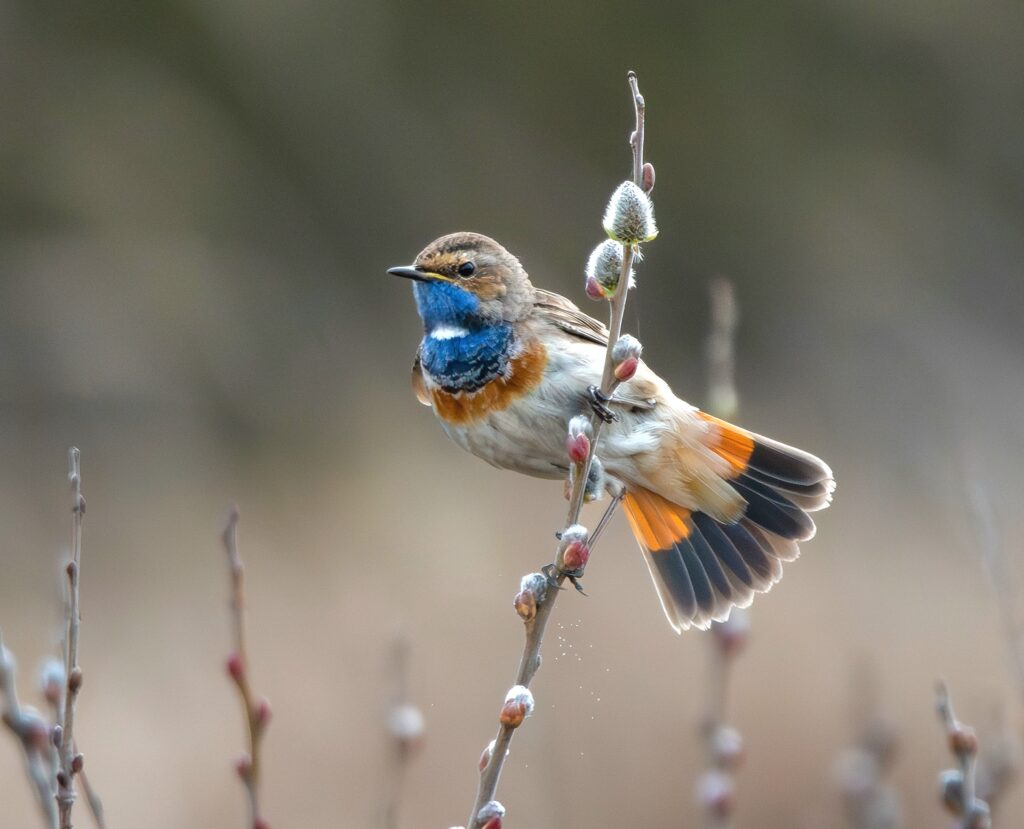
Walking through the Helderse Noordduinen with Walter is like seeing with different eyes. Or rather, with better ears. Where you initially see mostly sand and marram grass, he hears the difference between species, seasons, and behavior. A bluethroat making itself heard. A wheatear busy with its territory. Without leaving the paths, we already saw wheatears, bluethroats, and shelducks. In between, we also saw a goshawk on top of a dune, as if it were keeping an eye on the entire area.
Many people associate Den Helder with the harbor, the navy, or a day at the beach. Understandable. But anyone who walks into the dunes discovers something else. Here lies nature that isn't hidden away, but simply begins at the edge of the city. And it is richer than you expect.
This is no standard dune area. Here, multiple worlds converge. Sea, sand, and wind form a landscape where birds migrate along the coast, alight, and sometimes stay. With an easterly wind, they follow the coastline. Right here. That makes this place part of an important migration route. You aren't just standing around looking; you are standing in the midst of a movement that is much larger than this small corner of the Netherlands.
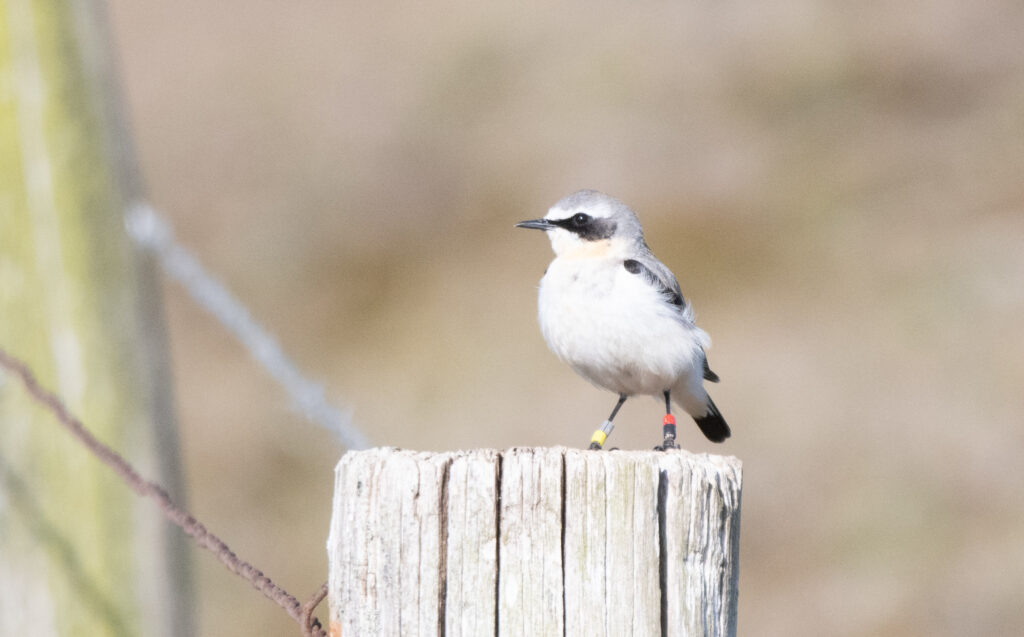
And then there is the wheatear. At first glance, a small, unassuming little bird. But appearances are deceiving. Den Helder is one of the most important strongholds of this species on the Dutch mainland. That makes this no chance encounter, but something special. Especially since the wheatear is listed as endangered on the Red List in the Netherlands.
The wheatear belongs to a landscape that is becoming increasingly rare: open, rugged, and with enough peace and quiet to breed. In the Helderse dunes, it still finds this. It makes its nest in rabbit burrows, hidden in the sand. Research into wheatears has been conducted in these dunes since 2007. By ringing birds, researchers can track where they breed, whether they return, and how the population is faring. This underscores how important this area is for a species that does not have an easy time in the Netherlands.
Walter says it almost as an afterthought, but that is precisely where the power lies. You can encounter Bluethroats in more places. Not the Stonechat. It makes Den Helder not just a beautiful spot like so many others, but a place with something you hardly see anywhere on the mainland anymore.
The bluethroat also showed itself clearly this morning. According to Walter, this is the most beautiful time. They sing, sit high up in the bushes, and give themselves away. In a few weeks, that will be different. Then they will have a partner, be busy breeding, and disappear from view much more.
As if its striking blue breast weren't enough, the bluethroat also effortlessly incorporates the sounds of other birds into its song. That makes it not only beautiful to look at, but also special to listen to.
That is precisely what makes a walk at this time of year so special. You don't just see birds, you see behavior. You notice that nature here is in motion. And as you pause for a moment and look around, you notice how quiet it actually is here.
What stands out is how everything here is interconnected. Rabbits digging burrows. Birds using those burrows. Wind keeping the landscape open. Birds of prey scanning the area from above. It is not a separate picture, but a system that works. And one that you can simply see during a walk through the dunes.
You see this reflected in the shelduck as well. Just like the wheatear, this bird often nests in old rabbit burrows, hidden deep beneath the sand. And once the chicks are born, something special happens. They are sometimes raised in groups, and suddenly you see dozens of little chicks huddled together, accompanied by a few adult birds.
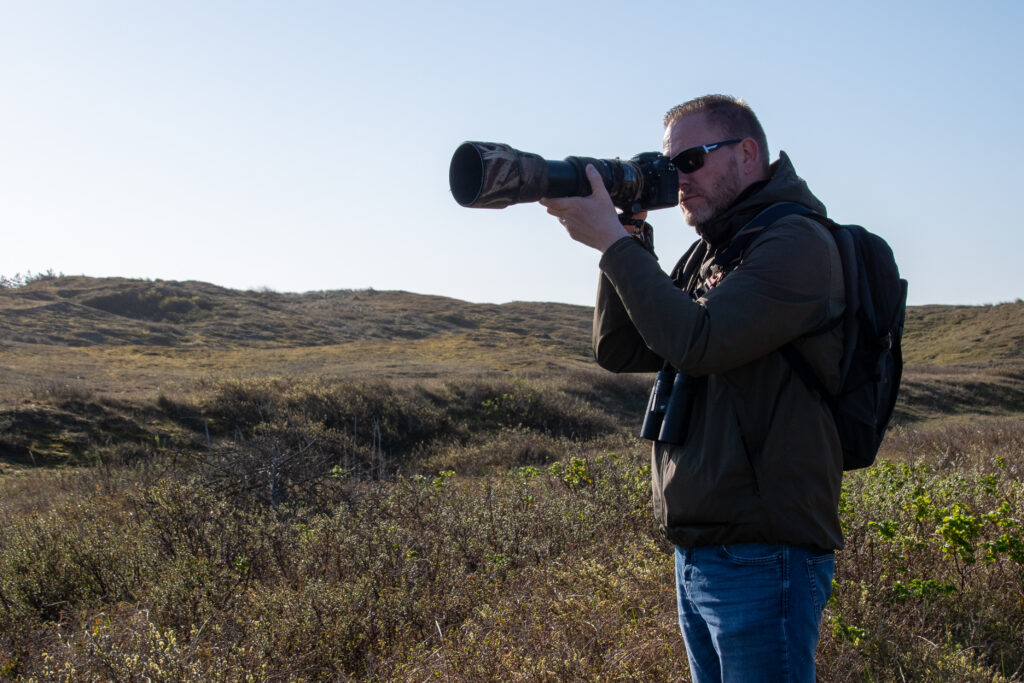
Meanwhile, Walter moves through the area with the eye of a photographer. He looks not only at what is there, but also at the light, height, and direction. That makes the difference between merely seeing something and truly understanding what is happening. It is precisely because of this that you start looking differently yourself.
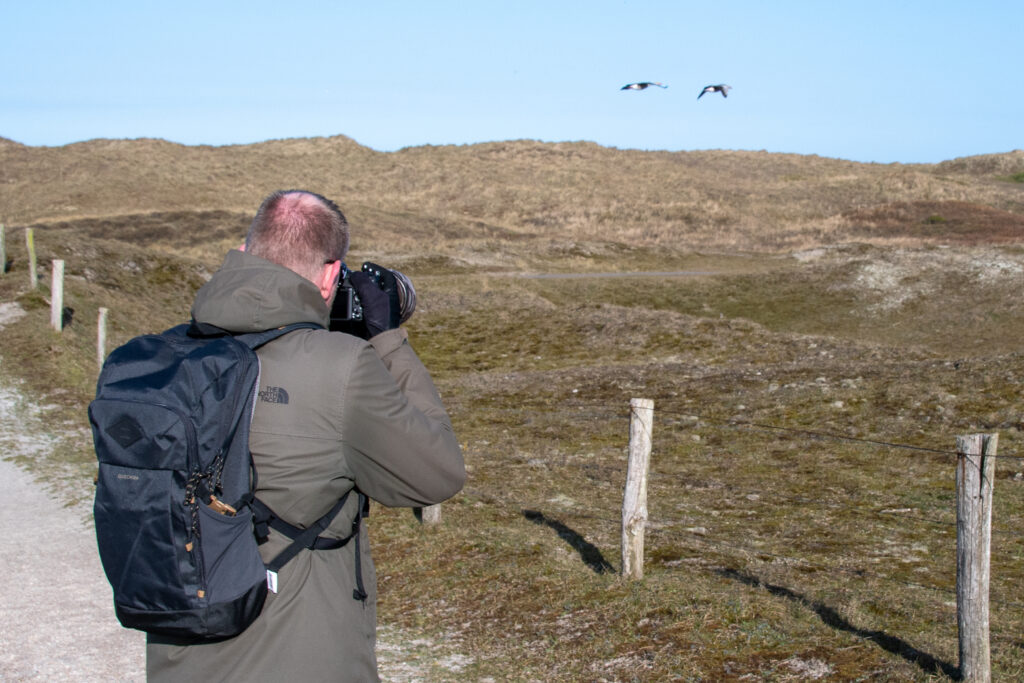
Perhaps that is the most beautiful thing about Den Helder. You don't have to go deep into a nature reserve for it. You don't have to be an expert. And you don't even have to go off the beaten path. Everything is already there. You just have to learn to see it.
That makes the Helderse Noordduinen not only special, but also accessible. Here lies no backdrop, but a living landscape that simply reveals itself to those who take the time to look closely. Stay on the path, take your time, and look around; often that is enough to experience something special.
And sometimes it all starts with a sound that you think is something rare. Until it turns out to be just a bicycle.

Curious about new construction, urban renewal, and developments in Den Helder? Then sign up for the newsletter.
Already 5,000 readers receive weekly updates.
Tips, events and new places.
Subscribe to our newsletter.